

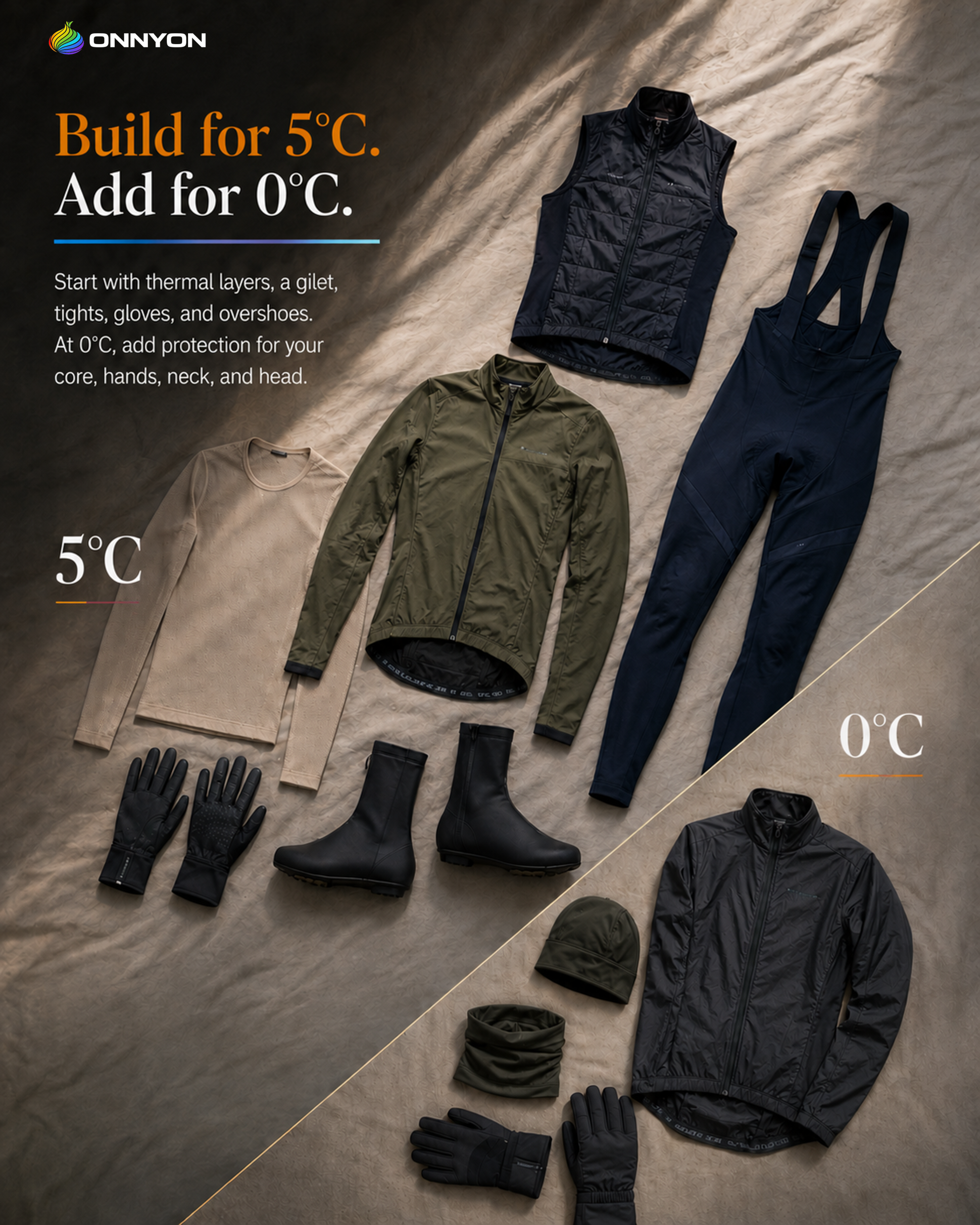
At 5°C, build around thermal layers: bib tights, a thermal base layer, a thermal jersey, a jacket, gloves, and overshoes. That combination covers most cold-weather rides.
At 0°C, add protection for your core, hands, neck, and head. Think insulated jacket, winter gloves, a buff or neck warmer, and a cap under the helmet.

10°C is where layering decisions matter most. A bib short, base layer, and long-sleeve jersey build the foundation. Then the outer layer depends on the ride: a jacket for exposed or wet conditions, a vest if it is drier and less windy.
Knee warmers and gloves are worth considering too, especially early in the morning or on longer rides where conditions can shift.
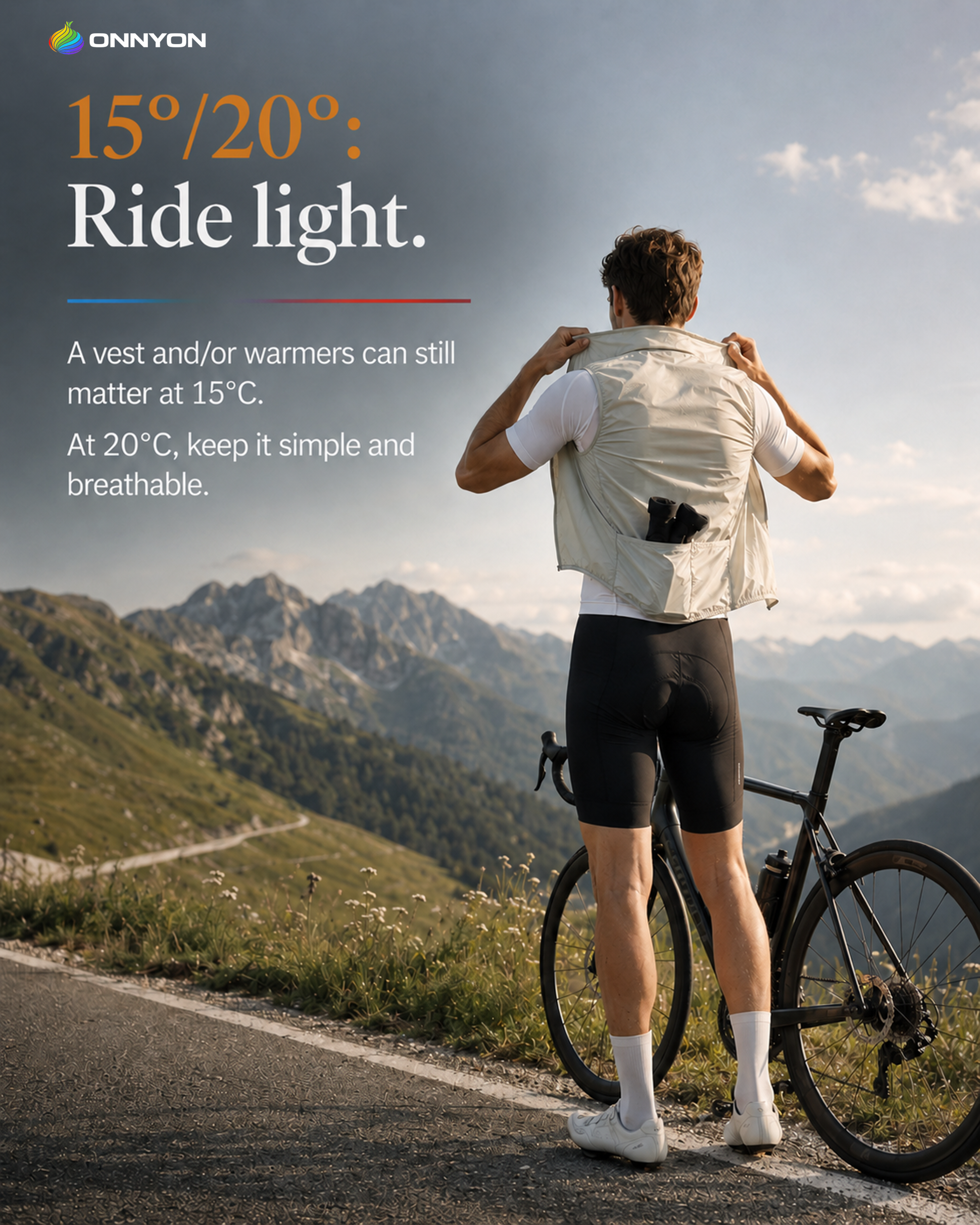
At 15°C, a vest and arm warmers can still make a real difference, especially at the start of a ride or on descents. The base is bib shorts, a base layer, and a jersey.
At 20°C, keep it simple and breathable. Bib shorts, a jersey, and a base layer if you run cold. Fingerless gloves are optional but often appreciated on longer efforts.
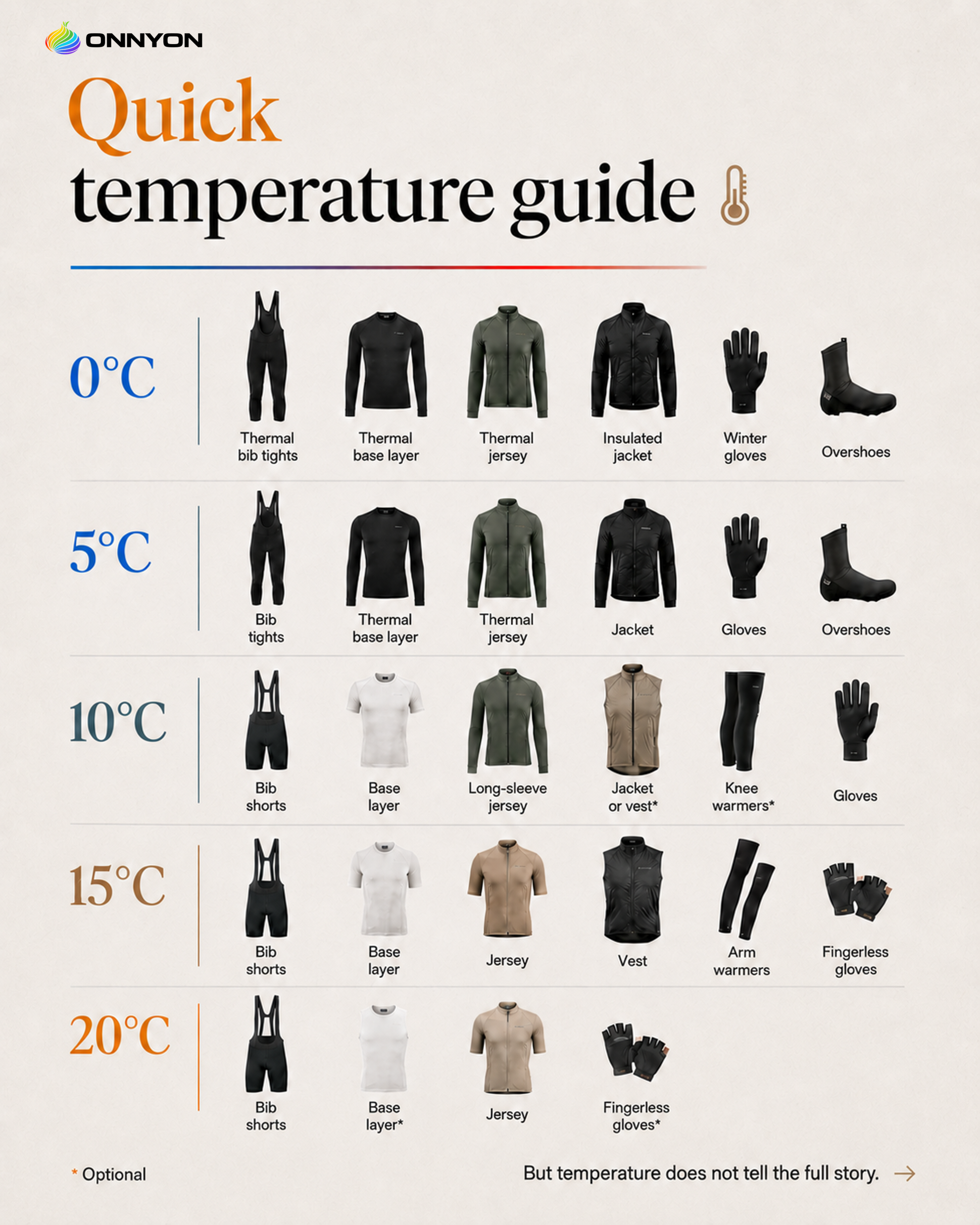
A quick reference across the five most common temperature ranges, from 0°C through to 20°C, showing the core items for each: what to wear on your legs, upper body, hands, and feet.
Items marked optional adjust based on wind, effort, and personal preference. But remember — temperature alone does not tell the full story of what a ride will feel like.
Temperature is a starting point, not the full answer. Wind, road conditions, route elevation, timing, and your own wardrobe all change what makes sense to wear.
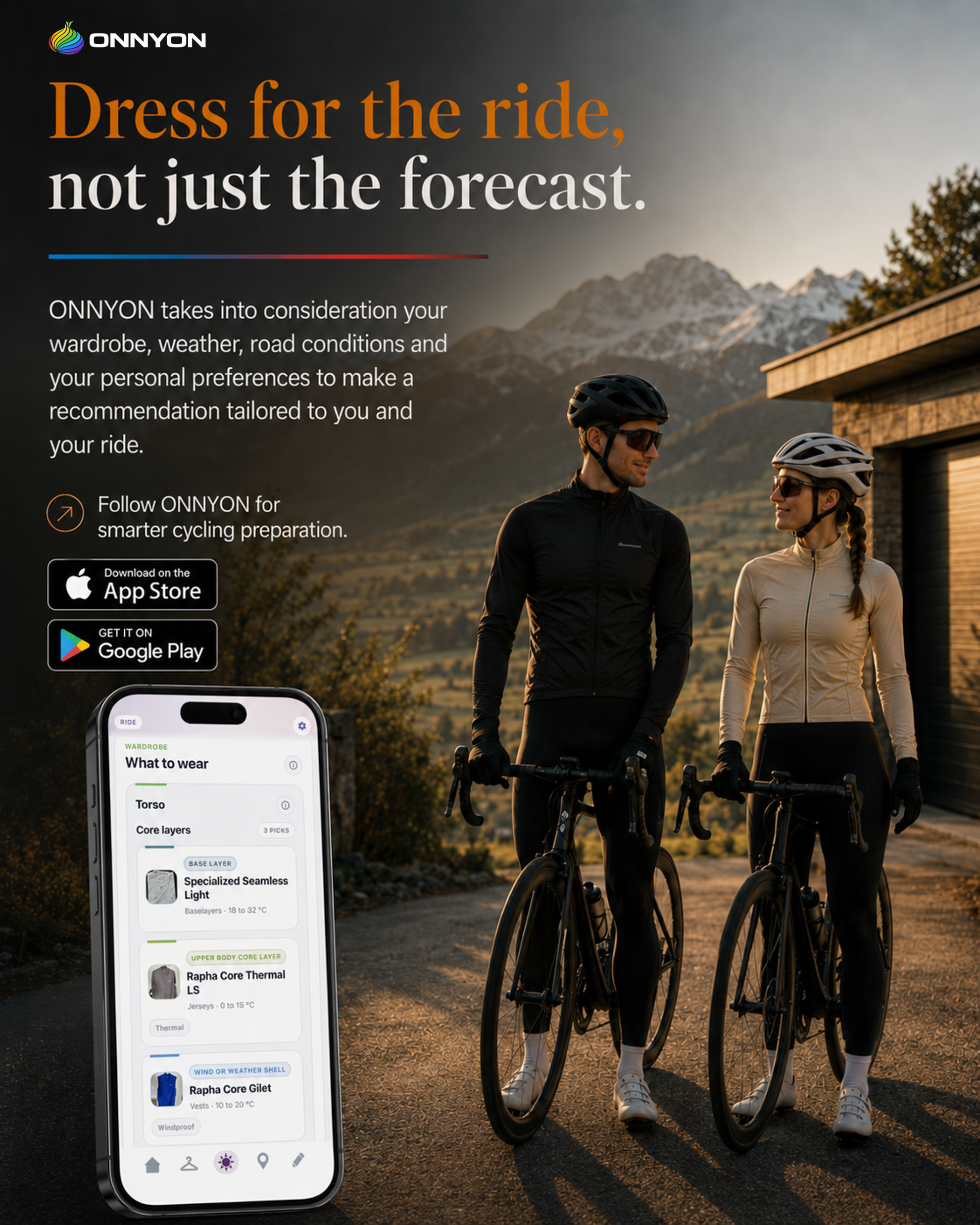
ONNYON takes all of that into account, then gives you a recommendation built around the gear you actually own. Dress for the ride, not just the forecast.