


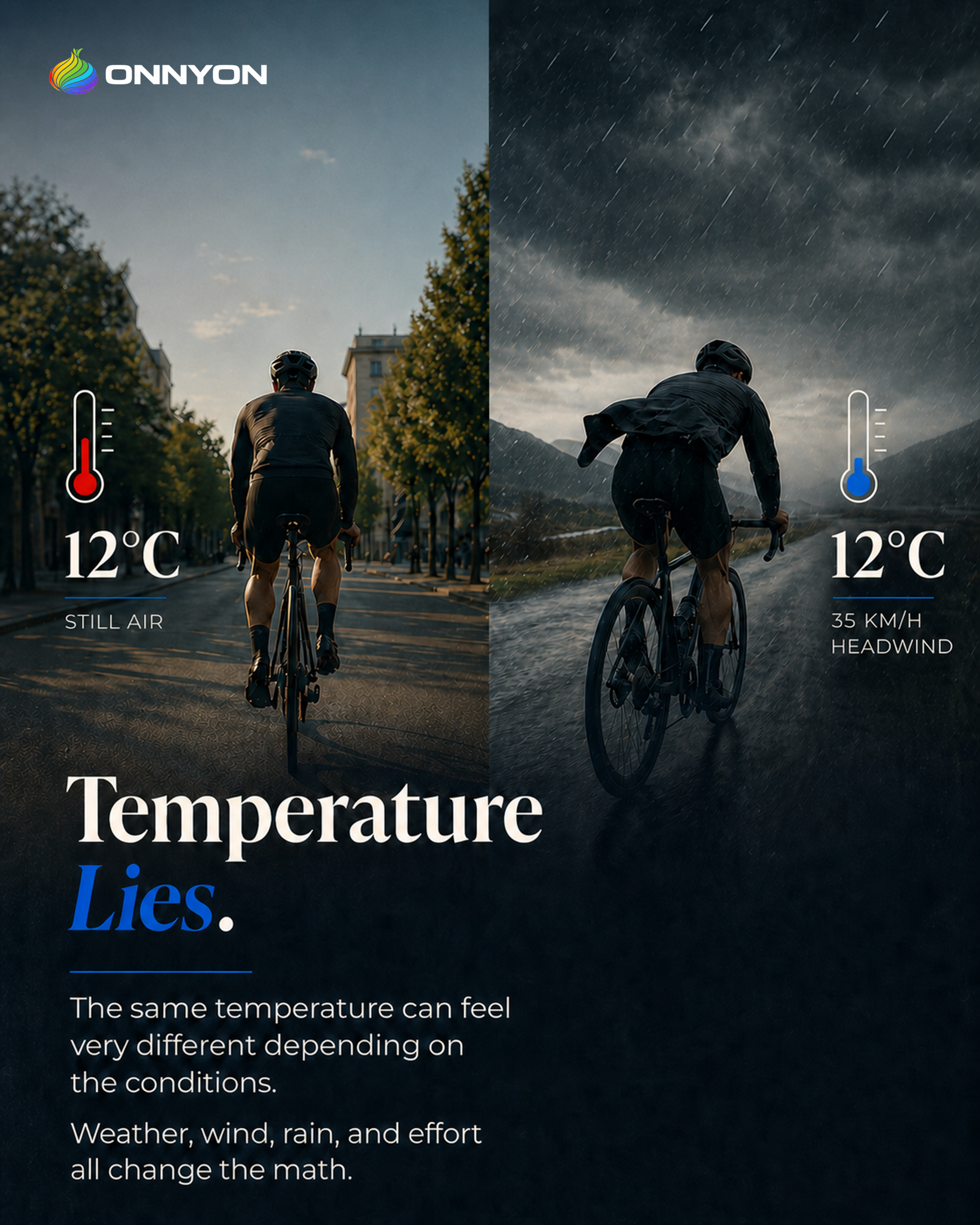
Twelve degrees can feel completely different depending on the conditions. A calm urban ride and a wet, windy headwind ride may show the same temperature but demand very different clothing choices.
That is why cyclists need to think beyond the forecast and consider wind, rain, exposure, effort, and road conditions together.
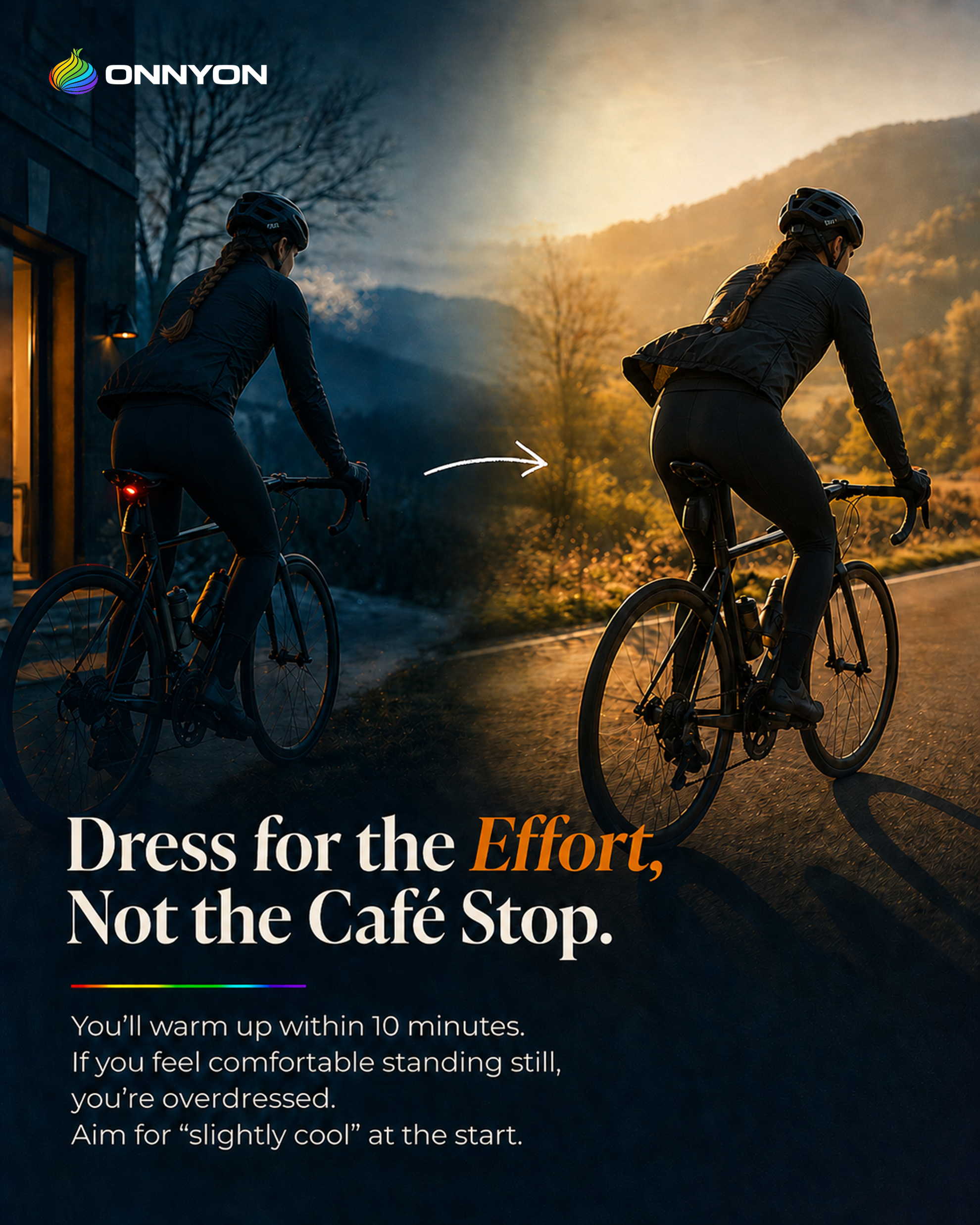
If you feel perfectly comfortable standing still before the ride, you may be overdressed once your body warms up.
A slightly cool start is often a good sign. The goal is to dress for the effort you are about to produce, not for the first minute outside the door.
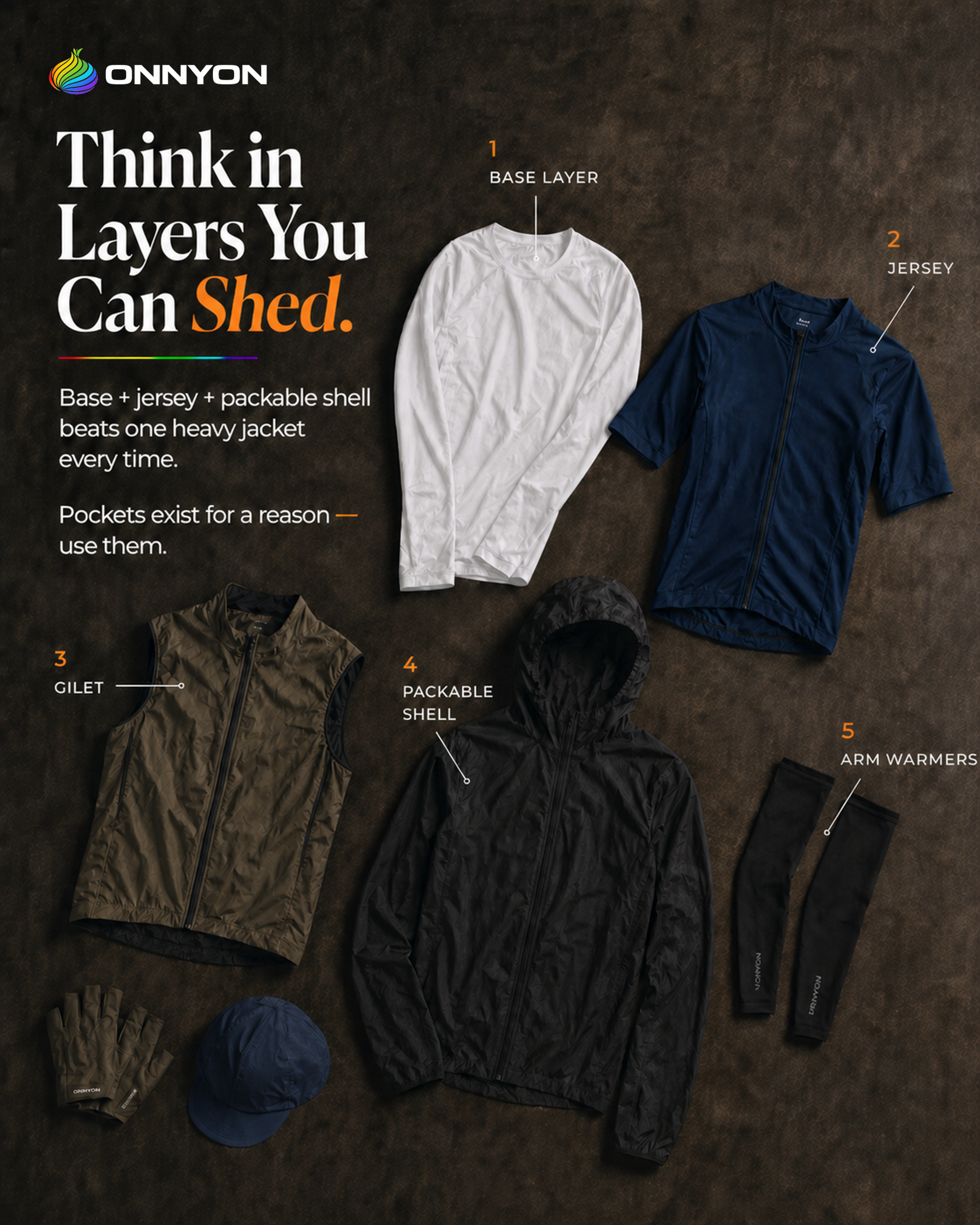
Layering gives you flexibility. A base layer, jersey, vest, arm warmers, or packable shell can adapt to changing conditions better than one heavy piece.
Good cycling kit is modular. You want options you can open, remove, pocket, or combine as the ride changes.

The hardest clothing moment is not always at the start. It might be an exposed climb, a shaded valley, a wet descent, or the final stretch after the sun drops.
Planning for the coldest or most exposed part of the ride helps avoid being underdressed when comfort matters most.
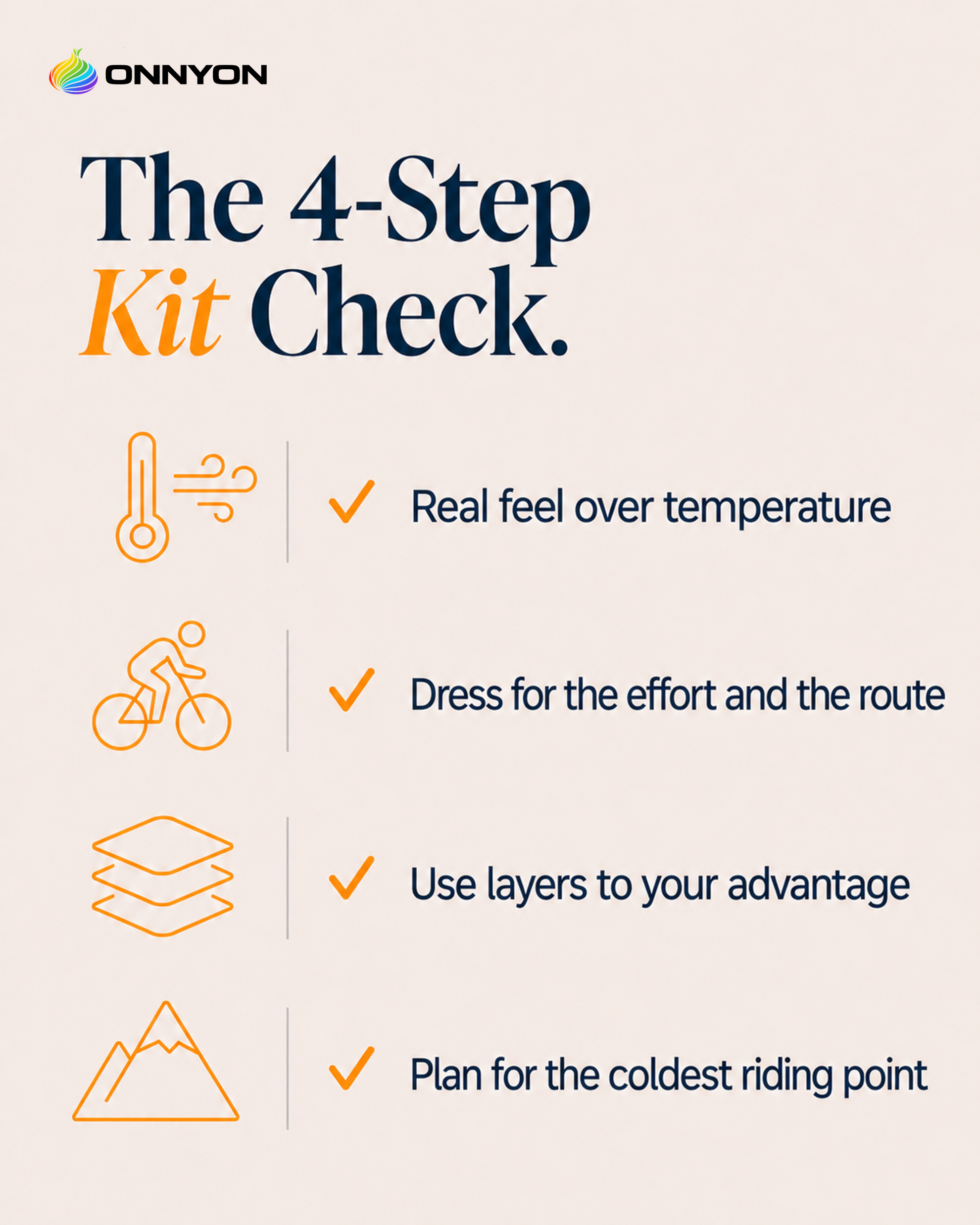
A good outfit decision starts with four checks: real feel, effort, layers, and the coldest point of the ride.
This simple process helps turn a vague forecast into a practical kit choice, especially when conditions are variable or the route is longer than usual.

The goal is not to overthink every ride. It is to make the clothing decision faster, smarter, and more consistent.
ONNYON is built around that idea: helping cyclists prepare with outfit recommendations based on their wardrobe, the weather, and the ride ahead.